Investigating crimes and pursuing lawful justice
Criminal accountability is an important part of addressing serious human rights violations. It involves investigating alleged crimes, determining whether there is sufficient evidence to bring charges, and presenting cases before a competent court in accordance with the law.
In The Gambia, the Truth, Reconciliation and Reparations Commission (TRRC) recommended prosecutions arising from violations committed between July 1994 and January 2017. Acting on those recommendations requires specialised legal and investigative capacity, appropriate judicial arrangements and safeguards that protect the rights of victims, witnesses and accused persons.
“Criminal accountability requires specialised legal and investigative capacity, appropriate judicial arrangements and safeguards that protect the rights of victims, witnesses and accused persons.”
What is the Special Prosecutor’s Office?
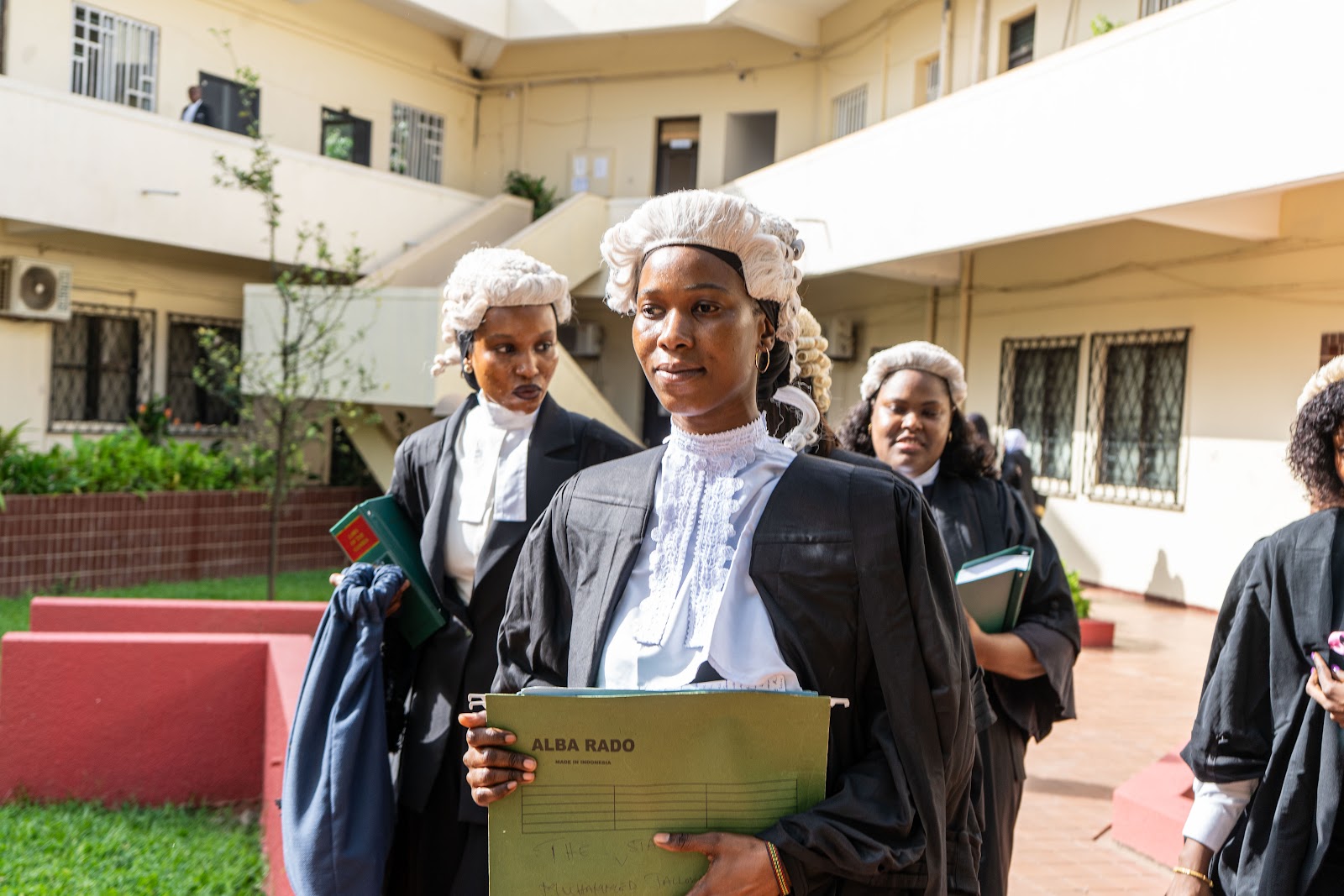
The Special Prosecutor’s Office (SPO) was established under the Special Prosecutor’s Office Act, 2024. The Act provides for an independent and autonomous institution responsible for investigating and prosecuting serious human rights violations and relevant international and domestic crimes falling within its statutory mandate.
The Office forms part of the wider Special Accountability Mechanism developed to implement the TRRC’s accountability recommendations.
The Special Prosecutor leads the Office’s work, including decisions concerning investigations, case selection and prosecution strategy. The statutory framework provides for cooperation with relevant national and international partners and for measures to protect victims, witnesses and whistle-blowers.
How does the Office fit into the wider accountability framework?
The Special Prosecutor’s Office is not the same as a court. Its role is to investigate and prosecute cases within its mandate; the determination of criminal responsibility rests with the competent judiciary.
The wider framework includes the Special Criminal Division of the High Court and the ECOWAS-backed Special Tribunal for The Gambia. The applicable jurisdiction and legal arrangements determine where a case may be heard.
These institutions have distinct functions. Effective coordination is necessary, but each must operate within its own mandate and in accordance with the applicable law.
“The Special Prosecutor’s Office is not the same as a court. Its role is to investigate and prosecute cases within its mandate; the determination of criminal responsibility rests with the competent judiciary.”

What does operationalisation involve?
The appointment of a Special Prosecutor is an important milestone, but it is only one part of establishing an effective institution.
The Office must develop the personnel, procedures, investigative capacity and resources necessary to carry out complex cases. This includes obtaining and analysing evidence, developing prosecutorial strategies, preparing cases for trial, supporting and protecting witnesses, and cooperating with relevant authorities.
These cases may involve events that occurred many years ago, multiple alleged perpetrators, documentary and forensic evidence, and witnesses who may require particular safeguards. Investigations must therefore be thorough, impartial and grounded in reliable evidence.
The Special Prosecutor’s Office is now moving into the practical work of exercising its mandate. The progress of that work should be assessed through verified developments in institutional capacity, investigations and case preparation, rather than through announcements alone.
Why does this matter?
For victims and their families, criminal accountability concerns the recognition of serious wrongdoing and the possibility of justice through lawful proceedings. For the wider public, it concerns the principle that serious violations must be addressed through credible institutions rather than left unanswered.
Accountability also requires fairness. Allegations must be investigated properly, evidence assessed impartially, and the rights of accused persons respected. A credible prosecution depends on these safeguards, not on the assumption of guilt.
Criminal proceedings cannot address every consequence of past violations. Reparations, truth, memorialisation and institutional reform remain essential parts of the wider transitional justice process.
The establishment of the Special Prosecutor’s Office creates an important institutional basis for accountability. Its lasting significance will depend on its ability to carry out its mandate independently, fairly and effectively.
“Accountability requires fairness. A credible prosecution depends on impartial assessment of evidence and fair-trial safeguards, not on the assumption of guilt.”